Newspaper Advertising in 2026: The Modern Marketer’s Playbook
Newspaper advertising remains a powerful, high-trust medium in 2026. Learn how to maximize credibility, regional reach, and measurable impact with print through this comprehensive guide by BuzzOmni.
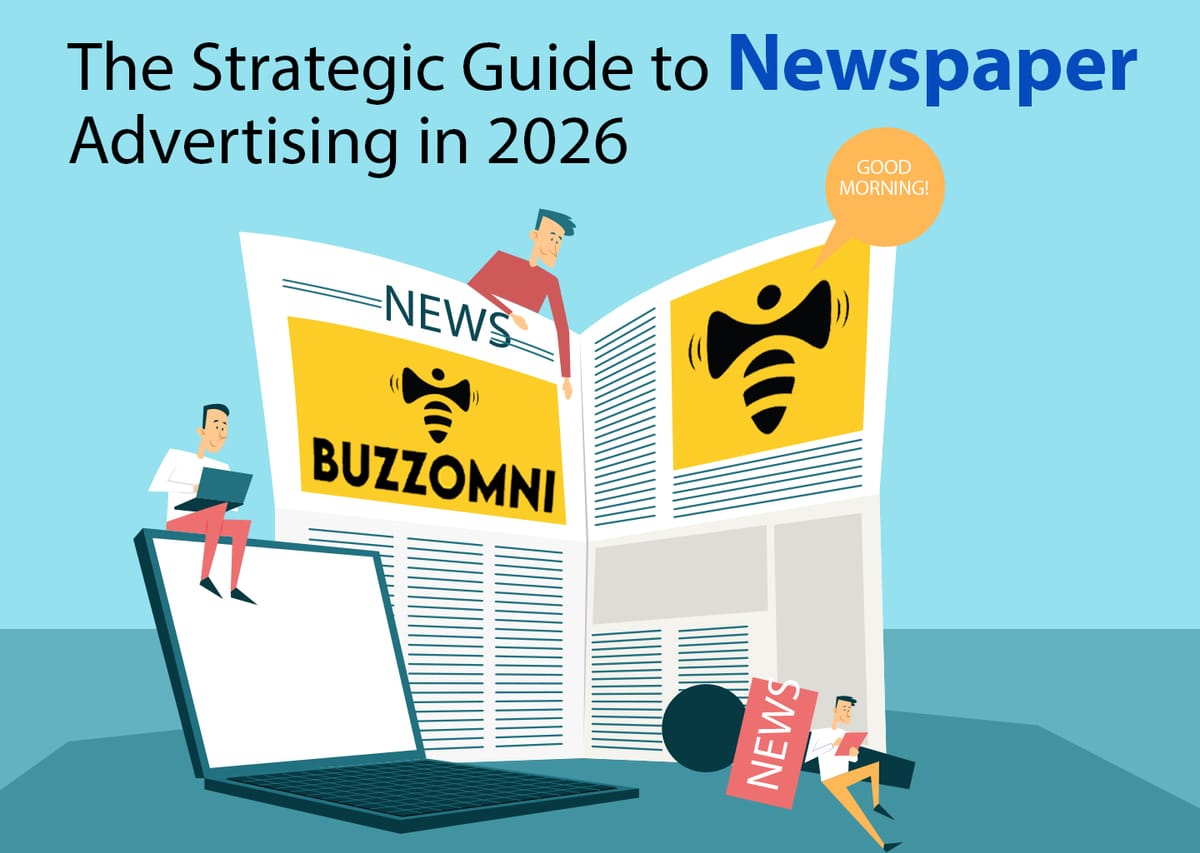
Table of Contents
- Introduction
- Why Newspaper Advertising Still Matters
- Types of Newspaper Advertisements
- How Newspaper Advertising Works in 2026
- Cost Structure in 2026
- Benefits for Brands
- Creative Best Practices
- Measuring ROI
- Integrating Print with Digital and OOH
- Industries That Benefit Most
- Final Thoughts
Introduction
In 2026, newspaper advertising remains a strategic medium for brands that value credibility, regional reach, and high-impact visibility. While digital channels dominate performance marketing conversations, print continues to deliver trust, authority, and sustained brand recall — especially in markets where readership remains strong.
This guide from BuzzOmni outlines how newspaper advertising works today, its benefits, costs, formats, and how to integrate it into a modern marketing mix.
Why Newspaper Advertising Still Matters
1. Credibility and Trust
Newspapers operate in a high-trust editorial environment. Ads placed within established publications benefit from contextual credibility, reinforcing brand legitimacy.
2. Strong Regional Reach
Print excels in hyperlocal targeting. Brands can choose specific cities, editions, and language publications to reach defined geographic audiences.
3. High Attention Span
Unlike fast-scrolling digital feeds, newspapers are consumed deliberately. This increases dwell time and improves ad recall.
Types of Newspaper Advertisements
Understanding available formats helps align investment with campaign goals.
Display Ads
Visual advertisements that include branding, imagery, and design elements. Common formats include:
- Quarter page
- Half page
- Full page
- Jacket ads (front-page wraps)
- Gatefold ads
Best suited for product launches, retail promotions, and brand-building campaigns.
Classified Ads
Text-based and cost-efficient. Used for recruitment, real estate, tenders, and announcements.
Advertorials
Sponsored editorial-style content that blends storytelling with marketing. Effective for thought leadership and detailed product communication.
Inserts
Printed flyers or brochures placed inside newspapers. Ideal for retail offers and hyperlocal promotions.
How Newspaper Advertising Works in 2026
The planning process has become more structured and data-driven.
Market & Publication Selection
Brands select publications based on:
- Circulation and readership data
- Demographic alignment
- Language preferences
- Industry relevance
Placement Strategy
Front-page positions command premium pricing but deliver maximum visibility. Inner pages offer cost efficiency while maintaining impact.
Scheduling
Day selection influences performance:
- Weekends: lifestyle, retail, consumer goods
- Mid-week: recruitment and B2B
- Festive editions: high consumer engagement
Platforms like BuzzOmni streamline planning by allowing brands to compare publications, formats, and pricing across markets.
Cost Structure in 2026
Newspaper advertising is typically priced per square centimeter or per insertion. Rates depend on:
- City tier (Metro vs Tier 2/3)
- Ad size
- Page position
- Color vs black-and-white
- Circulation strength
Front-page ads can cost significantly more than standard placements. However, bundled packages now frequently combine:
- Print + e-paper
- Print + website display
- Print + social amplification
This hybrid approach improves overall ROI.
Benefits for Brands
High Brand Recall
Print ads often generate stronger recall due to focused consumption environments.
Ideal for High-Consideration Purchases
Real estate, automobiles, jewelry, education, and financial services perform particularly well in print because purchase decisions rely on trust.
Authority Signaling
Large-format print ads communicate scale and seriousness, helping new brands establish credibility quickly.
Tangible Visibility
Physical presence in print creates repeated exposure as readers revisit newspapers multiple times.
Creative Best Practices
To maximize impact in 2026:
Use a Clear, Dominant Headline
Avoid clutter. One strong message outperforms multiple competing claims.
Prioritize Visual Hierarchy
Use whitespace effectively and ensure readability from a distance.
Integrate QR Codes
QR codes connect offline exposure to measurable online engagement, enabling lead tracking.
Localize Messaging
Regional language and culturally relevant communication improve response rates.
Include a Strong Call to Action
Add contact details, store locations, URLs, or limited-time offers to drive measurable outcomes.
Measuring ROI
Print is no longer difficult to measure. Brands use:
- Unique coupon codes
- Dedicated landing pages
- QR tracking
- Missed-call numbers
- Retail footfall analysis
- Brand lift studies
When combined with digital retargeting, attribution becomes clearer and more actionable.
Integrating Print with Digital and OOH
The most effective campaigns are omnichannel. A typical strategy may include:
- OOH teaser campaign
- Newspaper launch announcement
- Digital retargeting
- On-ground activation
Newspaper advertising often serves as the credibility anchor within this mix, reinforcing trust established through other channels.
Industries That Benefit Most
In 2026, newspaper advertising remains highly effective for:
- Real estate
- Jewelry brands
- Retail chains
- Education institutions
- Government announcements
- Financial services
These sectors rely on trust-driven decision-making, where print performs strongly.
Final Thoughts
Newspaper advertising in 2026 is not outdated — it is strategic. It delivers credibility, regional dominance, and measurable results when planned correctly.
By combining strong creative, precise publication selection, and digital integration, brands can extract significant value from print media.
At BuzzOmni, we help brands plan, execute, and optimize newspaper campaigns alongside OOH and digital channels — ensuring every placement contributes meaningfully to overall marketing performance.