Airport Advertising in 2026: The Complete Strategic Playbook for Modern Brands
Airport advertising in 2026 is smarter, data-driven, and more immersive than ever. From programmatic DOOH to experiential activations, this guide explores how brands can leverage airport media for premium visibility, audience engagement, and measurable ROI.
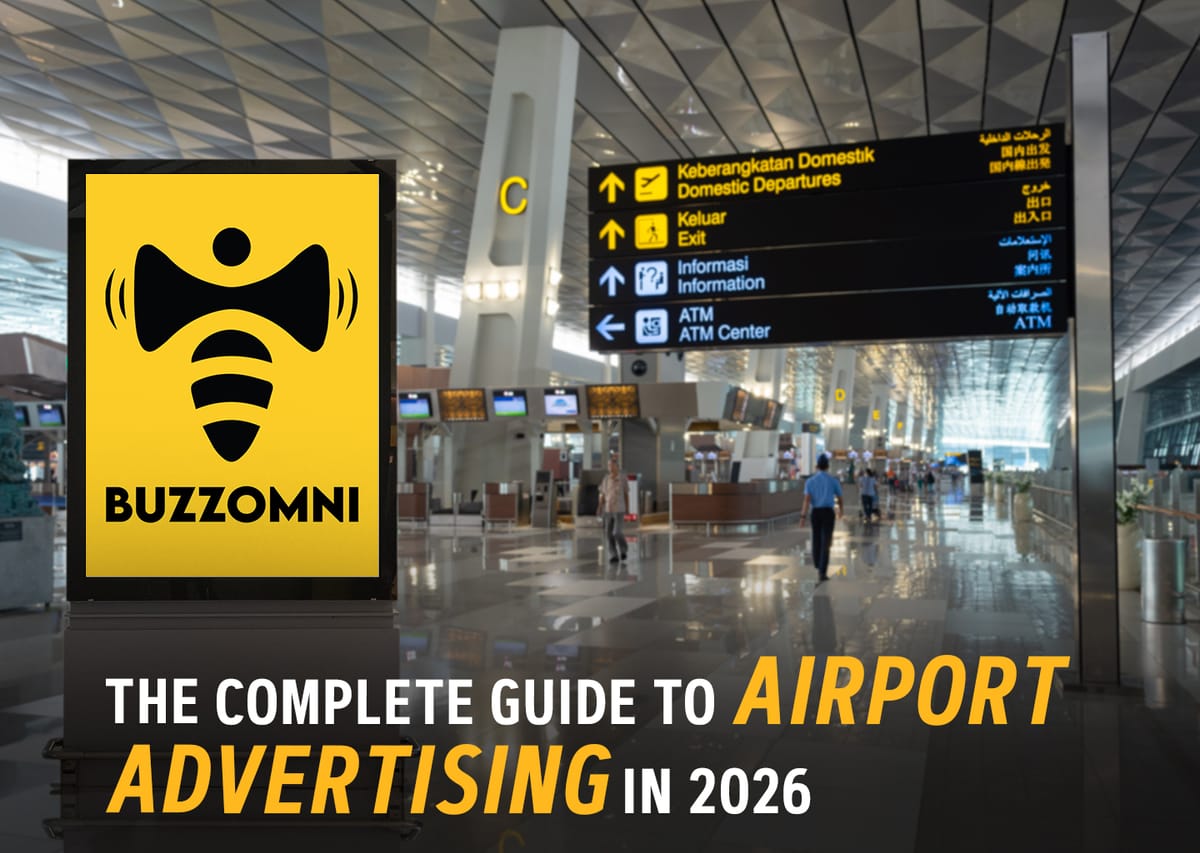
Table of Contents
- Introduction
- Why Airport Advertising Still Commands Attention
- Understanding the 2026 Airport Audience
- Leading Airport Advertising Formats in 2026
- Strategic Considerations for 2026
- Measuring Performance and ROI
- Budgeting and Buying Models
- Emerging Trends to Watch
- Conclusion
Introduction
Airport advertising has transformed into one of the most sophisticated and premium segments of out-of-home (OOH) media. In 2026, airports are no longer passive transit spaces; they are high-dwell, data-enabled environments where brands can engage affluent, mobile, and globally connected audiences with precision.
For marketers seeking high-impact visibility and measurable outcomes, airport advertising remains a strategic advantage.
Why Airport Advertising Still Commands Attention
Airports offer a rare combination of scale and audience quality. Travelers spend extended periods moving through security, waiting at boarding gates, relaxing in lounges, or browsing duty-free zones. This prolonged dwell time increases exposure frequency and message retention.
The demographic profile further strengthens the medium. Business travelers, international tourists, and frequent flyers typically have higher purchasing power and global mobility. For luxury brands, financial services, technology companies, hospitality groups, and premium retail, airport environments deliver targeted relevance.
Unlike cluttered urban OOH spaces, airport advertising benefits from a more controlled media environment, which enhances visibility and reduces noise.
Understanding the 2026 Airport Audience
Segmentation is critical for effective planning. Business travellers often respond to messaging around efficiency, productivity, financial solutions, and premium services. Leisure travellers are more receptive to lifestyle, entertainment, travel accessories, and hospitality brands.
Layover passengers represent a particularly valuable segment. With longer waiting times and limited distractions, they are more likely to engage with interactive displays or experiential activations.
Smartphone usage remains dominant inside terminals. Most passengers actively use mobile devices while waiting, enabling seamless integration between physical advertising and digital engagement through QR codes, NFC, and app-based interactions.
Leading Airport Advertising Formats in 2026
Digital Out-of-Home (DOOH)
Digital screens now anchor airport media networks. These displays allow dynamic content updates based on time of day, flight schedules, or audience flow. Programmatic DOOH enables automated buying, flexible scheduling, and performance optimization, bringing digital precision into physical spaces.
Brands can tailor messaging for morning business departures, evening leisure flights, or international terminals, increasing contextual relevance.
Experiential and Immersive Installations
Interactive brand zones are gaining prominence. Augmented reality mirrors, touchscreen experiences, product demo pods, and immersive installations transform passive impressions into active engagement.
These activations extend dwell time, encourage social sharing, and create memorable brand interactions that go beyond standard display advertising.
Mobile and Proximity Integration
Consent-based Wi-Fi analytics and beacon technology allow brands to connect airport exposure with digital action. Messaging can trigger app downloads, promotional offers, or additional content when passengers enter specific zones such as lounges or retail areas.
This bridge between OOH and mobile enhances attribution and strengthens campaign measurability.
Premium Static Dominance
Despite digital growth, static placements remain powerful for long-term brand presence. Terminal wraps, jet bridge branding, baggage claim dominance, and full concourse takeovers deliver visual authority and repeated exposure.
For sustained awareness campaigns, these formats provide unmatched scale and impact.
Strategic Considerations for 2026
Effective airport advertising requires precise alignment between audience, location, and timing.
Terminal demographics should guide placement decisions. Executive-focused messaging performs best in business lounges and premium terminals. Leisure-driven creative resonates near boarding gates serving holiday destinations.
Timing also matters. Peak travel seasons increase impressions, while flight delays often increase dwell time and engagement opportunities. Morning departures may skew toward corporate audiences, while evenings attract more leisure and international travellers.
Creative execution must be bold, legible, and concise. Airports are visually complex spaces, so clarity is critical. Messaging should communicate value within seconds. Strong calls to action—particularly QR codes tied to incentives—significantly improve interaction rates.
Localization enhances relevance. Multilingual messaging or destination-specific offers increase resonance, especially in international hubs.
Measuring Performance and ROI
Measurement capabilities in 2026 have evolved substantially. Digital screens provide impression tracking and playback verification. Interactive installations generate engagement metrics. Mobile integrations enable scan tracking, app installs, and even store visit attribution.
Advanced attribution models now connect airport campaigns to online conversions and retail footfall, shifting airport advertising from a pure awareness tool to a measurable performance channel.
For brands demanding accountability, this data-driven evolution strengthens the business case for airport media investment.
Budgeting and Buying Models
Programmatic DOOH has introduced flexibility into airport media buying. Advertisers can adjust schedules, optimize budgets, and run short-term campaigns with greater agility.
Direct buys remain suitable for premium static placements and exclusive sponsorships. Some airport operators are exploring performance-linked agreements, aligning costs with engagement metrics or defined outcomes, reducing investment risk.
Strategic planning should balance high-impact visibility with data-enabled efficiency.
Emerging Trends to Watch
Artificial intelligence is beginning to influence creative personalization, allowing adaptive messaging based on real-time audience patterns. Immersive mixed-reality experiences are expanding, turning airport spaces into branded environments rather than simple ad placements.
Sustainability is also shaping infrastructure, with energy-efficient digital displays and eco-conscious production materials becoming standard practice.
As analytics platforms become more advanced, transparency in reporting and ROI measurement will continue to improve.
Conclusion
Airport advertising in 2026 remains one of the most premium, high-attention channels in the OOH ecosystem. It combines affluent audiences, extended dwell time, technological sophistication, and growing measurability.
For brands willing to integrate data, creativity, and strategic placement, airports offer more than visibility. They offer influence at scale.
When executed thoughtfully, airport advertising becomes a powerful intersection of brand storytelling and performance-driven marketing—positioning brands exactly where global journeys begin.