When the T20 World Cup Takes Over, Brands Win Beyond the Screen
As the T20 World Cup unfolds, cricket moves beyond screens and into streets, conversations, and daily routines. This blog explores how brands can tap into the tournament’s energy through strategic out-of-home visibility that meets fans where the game is truly lived.
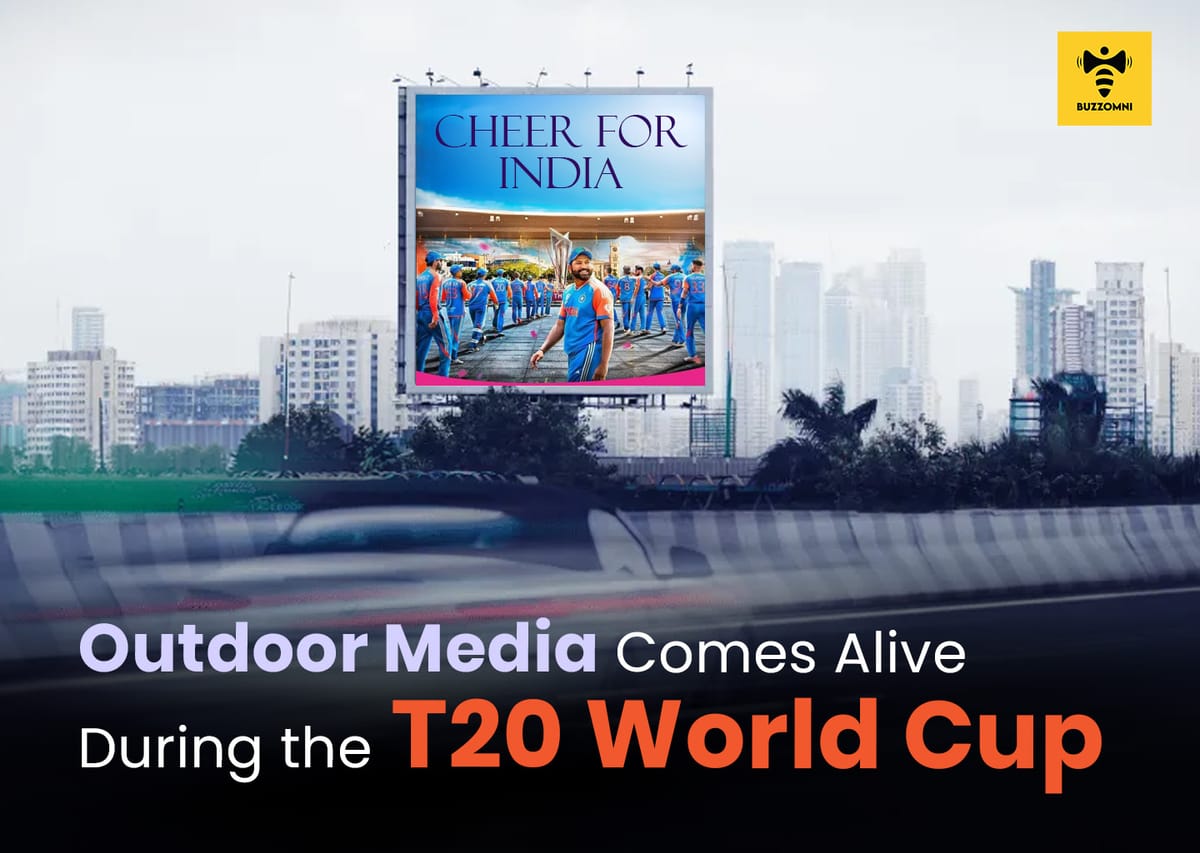
Table of Contents
- Introduction
- Cricket as a Daily Ritual
- From Visibility to Context
- The City Becomes the Medium
- Why OOH Performs During the T20 World Cup
- The Buzzomni Perspective
Introduction
The T20 World Cup is more than a sporting tournament—it’s a cultural takeover. For weeks, cricket dominates conversations, routines, and public spaces, turning cities into extensions of the stadium. From office discussions to evening plans built around match timings, the tournament reshapes how people move, gather, and engage.
For brands, this creates a rare window of heightened attention. And while digital platforms capture in-match engagement, it’s the physical world—streets, transit routes, markets, and neighbourhoods—where recall is built and reinforced. This is where Out-of-Home (OOH) advertising comes into its own.
Cricket as a Daily Ritual
Unlike long-format tournaments, the T20 World Cup is fast-paced and frequent. Matches happen almost every day, keeping momentum high and interest sustained across weeks. This consistency turns cricket into a daily ritual rather than a one-off event.
OOH fits naturally into this rhythm. Whether it’s a billboard encountered during the commute home, a transit media placement near business districts, or a high-impact installation near social hubs, outdoor messaging reaches audiences in moments when anticipation is already building.
When consumers are emotionally invested, brand communication doesn’t need to shout—it needs to show up at the right time and place.
From Visibility to Context
What distinguishes effective World Cup advertising is relevance. During the T20 World Cup, context becomes as important as creative. Outdoor campaigns that align with match schedules, peak viewing hours, or city-specific fan behaviour feel timely rather than transactional.
OOH allows brands to anchor themselves within the cultural moment without interrupting it. Large-format creatives during marquee fixtures, evening-heavy placements during high-stakes games, and high-frequency exposure across match days help brands stay top-of-mind throughout the tournament.
In a media landscape crowded with notifications and second screens, outdoor advertising offers clarity and permanence.
The City Becomes the Medium
As the tournament progresses, cities visibly change. Cafés turn into viewing zones, offices organise screenings, delivery traffic spikes during match hours, and late evenings become social. These shifts in behaviour create predictable, high-value touchpoints for brands.
Strategic OOH placement around residential clusters, nightlife zones, transit corridors, and commercial districts ensures that brands remain present across the fan journey—before the first ball and long after the last over.
Unlike digital impressions that disappear instantly, OOH builds cumulative impact. Each exposure reinforces the last, making brand recall stronger as the tournament advances.
Why OOH Performs During the T20 World Cup
The T20 World Cup delivers a unique combination of scale, frequency, and emotional engagement. OOH leverages this by offering:
- High-impact visibility in real-world environments
- Sustained presence across multiple match days
- Association with a high-energy cultural moment
- Trust and stature through physical media
When audiences are already saturated with screens, outdoor media cuts through by being unavoidable and familiar.
The BuzzOmni Perspective
At BuzzOmni, we see the T20 World Cup as a live cultural canvas. One where outdoor media doesn’t just amplify campaigns—it grounds them in real-world relevance.
The brands that stand out during the tournament aren’t those chasing momentary attention, but those consistently present in the spaces fans move through every day. Because when cricket takes over the nation, the most effective brand conversations happen on the streets—where the game is lived, not just watched.